ABOUT SPLIT
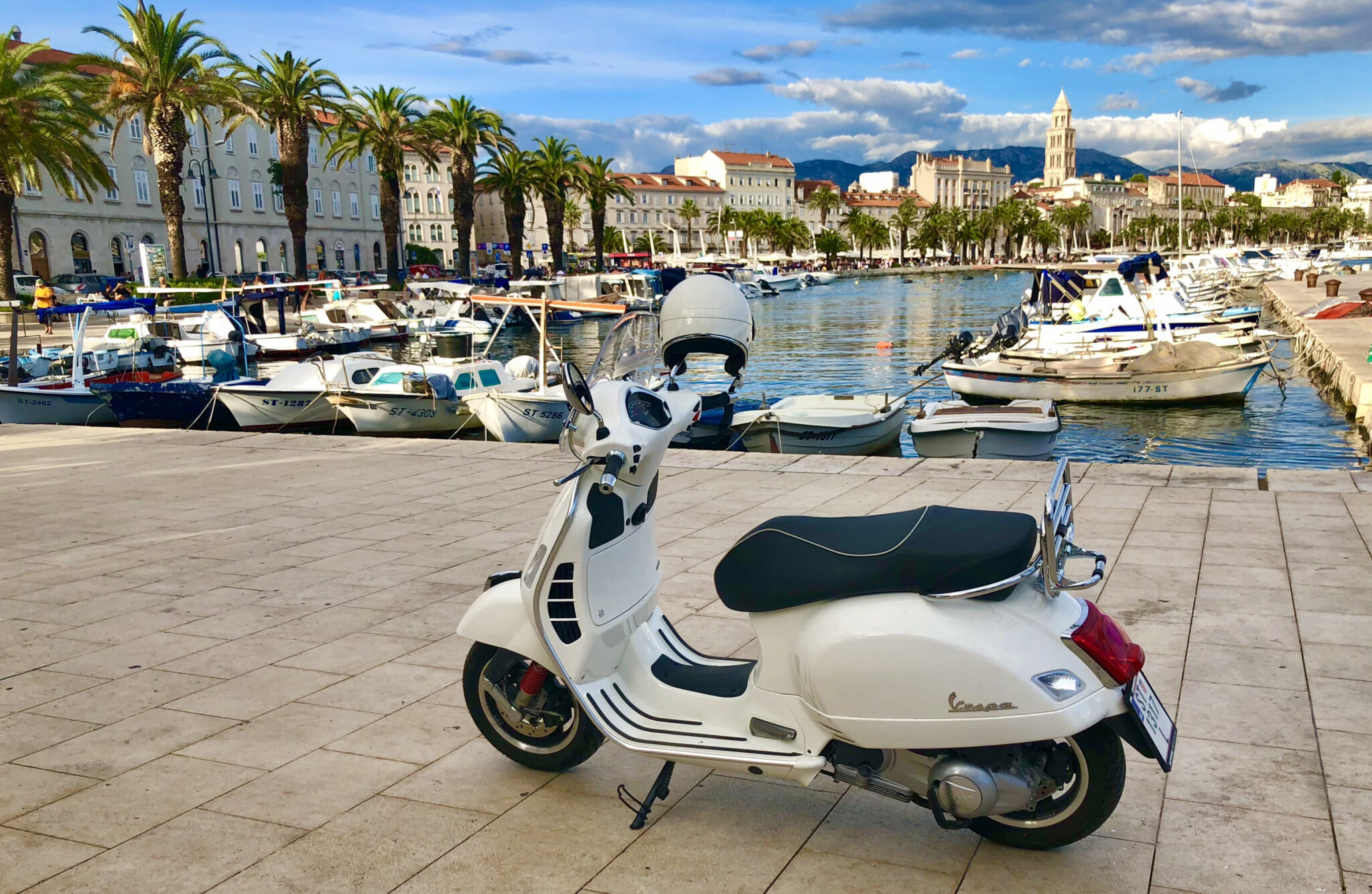
It is well known that the Roman Emperor Diocletian chose the area of present-day Split at the end of the third century as the site for his palace. To this day, people still debate what drew him here — the wooded hill of Marjan, the open view of the islands, or something else entirely. Perhaps the answer is best discovered in a walk along the Riva and within the palace walls once walked by the emperor himself.
Split is a city of strong sporting tradition. It has produced tennis greats, including champions of Wimbledon, as well as footballers, water polo players, basketball players, rowers, sailors, long jumpers and many other internationally acclaimed athletes. Yet for the people of Split, the most beloved sport is picigin — a unique local game born at the city beach of Bačvice, where a small ball must stay in the air, accompanied by spectacular dives in the shallow sea.
The city also cherishes a rich musical heritage. Klapa singing, performed in stone settings such as the Vestibul, takes on an almost mystical quality, while a vibrant pop scene and longstanding festival tradition reflect Split’s enduring musical spirit.
Traveling & accessibility
With its excellent Middle Dalmatia location, Split has ideal location to reach it by car, plane or ferry.
If coming from western or central Europe, there is a highway taking you all the way to Split, most suitably from Zagreb even Rijeka direction.
When choosing to reach Split by plane, Zadar has excellent flight connections with all the biggest European cities such as : Amsterdan, Bruxelles, Frankfurt, Munich, Kopenhagen, Stockholm, London, Dublin, Milan, Rome Athens, Istanbul, Belgrade, Krakow and many others.
Split’s airport is located in Kašteli and you can easily reach city centre within 20 to 30 min.
A third option to visit Split is to come by ferry from Ancona (Italy).
For transportation inside Split, regular taxi, Uber and Bolt are an option.
For shuttle transfer from and to the airport price should be cca 40 € to 60 €.
Climate
Split enjoys a very mild Mediterranean climate, with long, hot summers. July is peak season and typically quite warm, so don’t forget to pack your swimsuit in case you find some free time to head to the beach.
Even so, it is advisable to bring a light jacket or shirt, as evenings can occasionally be breezy.
Time difference
Croatia is located in the Central European Time Zone, better to say, it is 1 hour ahead of Greenwich Mean Time (GMT+1).
Tipping
Service is almost always included in hotel and restaurant bills and further tip of a few coins is appropriate.
You can leave tips in case you are satisfied with a service in the restaurant, but waiter has no right to require that.
Currency and payments
Croatian official currency is Euro (EUR).
Payments are possible in cash, as well with credit cards (Visa, Mastercard, Diners, Amex)
Electricity
Electricity used in Croatia is 230 Volts / 50 Hz. A transformer is necessary for your electrical or electronic equipment if using different voltage (i.e. USA, Canada). Please make sure to bring adapters since sockets in your country may differ from those in Croatia.
Internet connection
Wi-Fi free access for all conference participants will be available during the whole conference in congress centre.
Many Split hotels as well offer free Wi-Fi.
Insurance
Participants are strongly recommended to take out adequate cover for health, travel and private liability insurance. The organisers cannot accept any liability for loss or damage of properties, injuries, unexpected events, non-appearance of specific speakers, program changes.
Passports and visas
Republic of Croatia is a member of the European Union.
The participants from particular countries are required to have valid visa.
Please take your passport as a personal identification document even when being an EU citizen.
There is visa-free entry for citizens of most European countries.
If necessary, visas are issued by diplomatic missions of the Republic of Croatia in a given country.
Republic of Croatia is a member of the Schengen area. Inhabitants of contractual states are allowed to cross borders between states within this area without undergoing border controls. Still, inhabitants of these states have the obligation to carry a passport or identity card with them.
Some countries require a visa.
Please contact your nearest Croatia Embassy or Consulate for further information or visit the website of Croatian Ministry of Foreign and European affairs to the link :
Visitors from non-EU Countries must possess a passport valid for at least a 3 month stay.
Participants requiring a visa should apply immediately to a consular office or diplomatic mission of the Republic of Croatia in their country in order to avoid a delayed arrival to the Symposium. Please note that the visa application procedure can take up to two months.
It is not possible to obtain a visa at the Split Airport.
Letter of Invitation
Invitation letters for short-stay visa purposes can be requested and will be issued by the Symposium secretariat upon request. Delegates requiring visas should request a visa invitation letter from the organisers at the time of registering for the event, ensuring sufficient time is left for applications to be completed.
Delegates are then responsible for contacting the relevant/appropriate embassy themselves.
The organizers can do nothing further to assist this process.
Should you require an official letter of invitation to obtain your visa to enter the Republic of Croatia, a form will have to be filled and sent.
More details about this will be announced properly and on time.
Please note that the organisers do not undertake any obligation to pay any expenses incurred by supplying these letters. The organizers also will not act as an intermediary between the foreign police and will not provide notarized invitation letters. Furthermore, for some countries, a confirmation of registration with payment may be required by the organizers/authorities.
Language
Official language in Croatia is Croatian, but most of the people you meet will be able to help you by speaking English.
Official language at the Symposium is English with no possibility of simultaneous interpreting.
-Important numbers
Dial number for Croatia : 00385
Police – 192
Fire station (department) – 193
ER (Medical Emergency) – 194